Medieval Villages Tour Barcelona
Visitor Guide

Medieval Town Near Barcelona

Catalonia holds a constellation of stone villages that remain largely unchanged since the 12th century. This guide covers the logistics, access details, and planning essentials for visiting Besalú, Rupit, Vic, and other Romanesque settlements within reach of Barcelona.

9 min read Updated 2026-08-31 Fact-checked
Medieval Town Near Barcelona

Quick answer

Rupit, a medieval village 100 kilometres north of Barcelona, is open year-round with free village access and operates 24 hours daily. Municipal parking costs apply, and the best arrival window is 07:00–10:00 to secure a spot in the lot and explore before coach groups arrive. Besalú and Vic operate on similar open-access models, with individual monuments and museums keeping their own schedules.

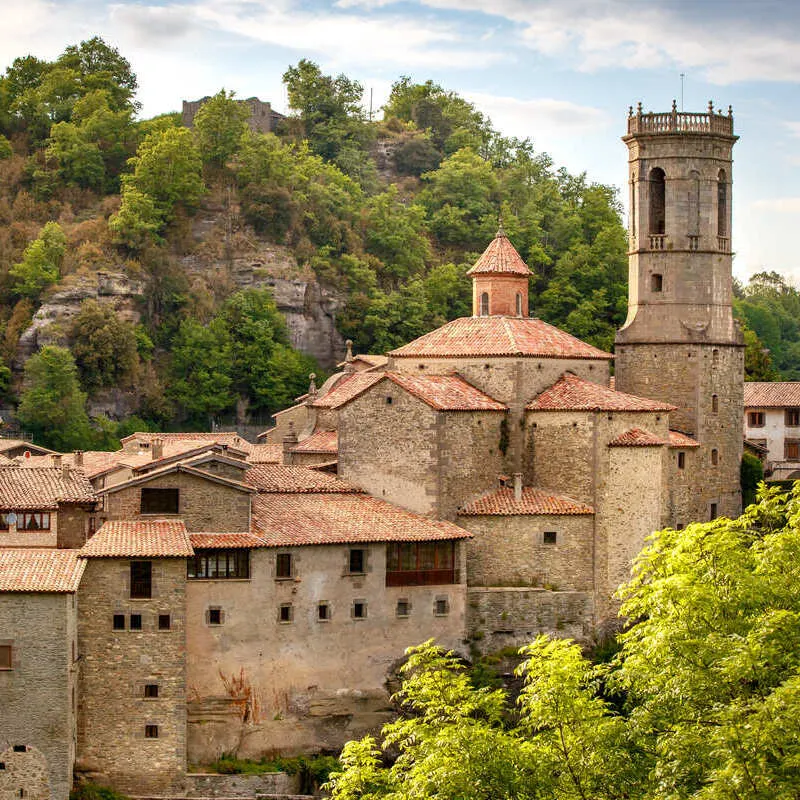
Rupit sits on a tufa cliff above a ravine, its cobbled streets and stone arcades unbroken by modern construction. The village imposed a preservation order in 1972 that froze its medieval layout, and today its population hovers near 300 year-round residents. Unlike fortified hilltop towns built for defence, Rupit developed as a market hub for the surrounding farmland, and its wide central plaza still functions as the village's social centre. Besalú, 50 kilometres west, anchors its identity to the 12th-century bridge spanning the Fluvià River. The town served as the capital of an independent county until 1111, and its mikveh—one of three surviving medieval Jewish ritual baths in Spain—remains intact beneath Carrer del Pont. Vic, closer to Barcelona at 70 kilometres, layers Roman foundations with Romanesque bell towers and a cathedral rebuilt after Spanish Civil War bombing. Each medieval town near barcelona delivers a different cross-section of Catalonia's feudal and ecclesiastic past, and none require advance booking to walk their streets. Access from Barcelona runs through the C-17 and C-37 highways for Rupit, the C-66 for Besalú, and the C-25 for Vic. Public transport exists but demands transfers and adds two hours to the journey; rental cars or private drivers remain the practical choice. Most visitors pair two villages in a single day, though Rupit and Besalú each justify half-day stops if you intend to walk the surrounding trails. The Catalan Pyrenees form a backdrop to all three, and September through November delivers the clearest mountain views without summer heat. Parking in Rupit concentrates in a single municipal lot at the village edge—Plaça Major, 6 marks the lot's postal address—and fills by mid-morning on weekends. Besalú offers riverside parking near the bridge, while Vic's old quarter permits street parking on blue-zone meters. The villages themselves ban cars from their historic cores, so expect 5–10 minute walks from lot to centre. Rupit's phone line, +34938522003, connects to the town hall for closure updates during heavy rain, when the ravine trails close for safety.

“Rupit imposed a preservation order in 1972 that froze its medieval layout, and today its streets remain unbroken by modern construction.”
Directions

Transportation Options to Every Medieval Town Near Barcelona

The medieval villages of Catalonia are located north of Barcelona, accessible via a combination of motorways and regional public transport networks. Driving provides the most direct route to these inland destinations, while regional trains serve as the primary public transit option for hubs like Vic.

Car 1 hour 45 min

C-17 motorway to Vic and C-37 towards Rupit

Train 1 hour 20 min

R3 line from Barcelona Sants to Vic station

Bus 2 hours

Sagales bus service from Barcelona to Besalú

Follow the best arrival window of 07:00–10:00 to avoid crowds and ensure parking availability in the municipal lot.

Prices

Entrance Fees and Costs for a Medieval Town Near Barcelona

Access to historic villages such as Rupit is provided at no cost for pedestrians. Visitors should anticipate municipal parking charges when traveling by private vehicle.

Village Entrance Free access to public areas
0 EUR
Municipal Parking Fees vary based on duration
Applied
Entry to the village streets and public spaces is free for all visitors at all times.

Verdict: Adults pay 0 EUR for village entry, with the final cost determined solely by municipal parking fees.

What to see

Architectural Highlights in Each Medieval Town Near Barcelona

The medieval villages surrounding Barcelona preserve unique architectural heritage through stone structures and historic plazas. These landmarks illustrate the evolution of Catalan design from the Romanesque period to the Middle Ages.

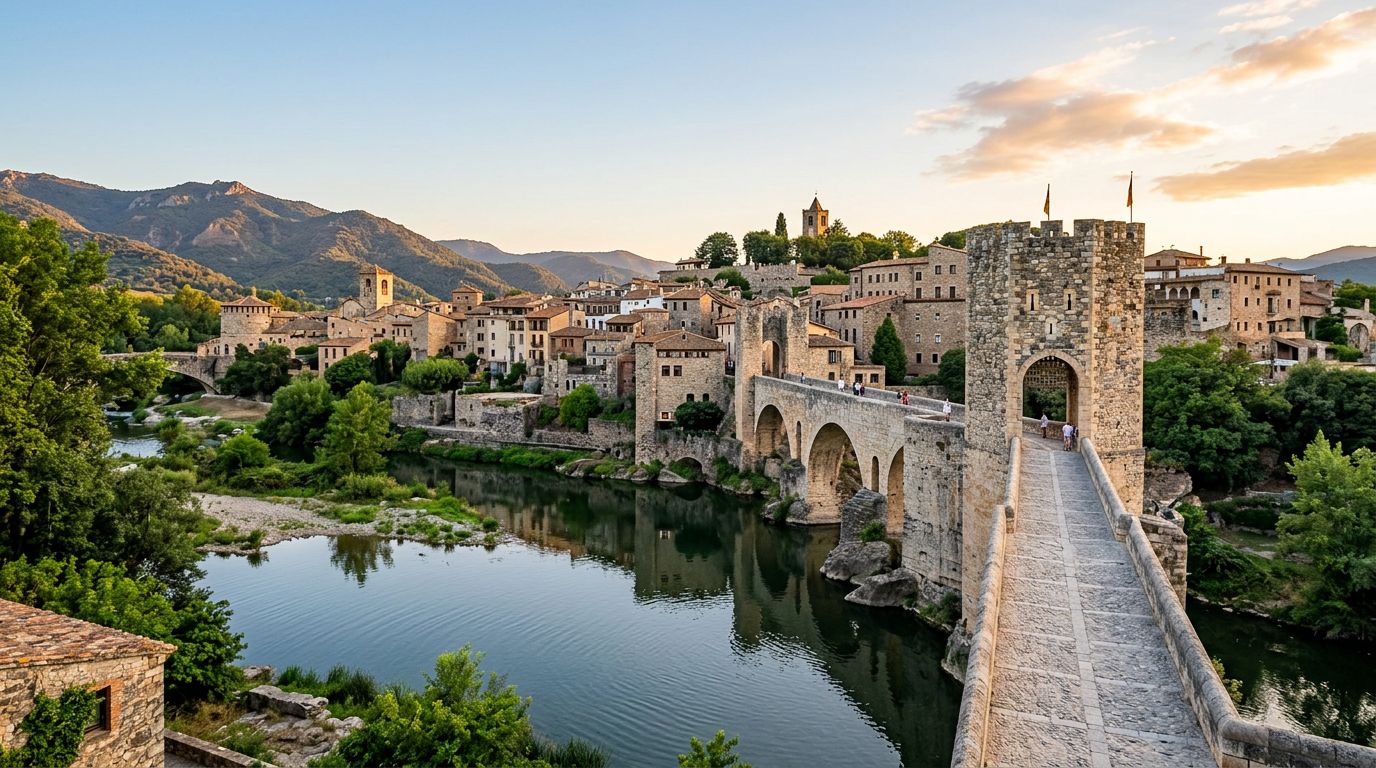
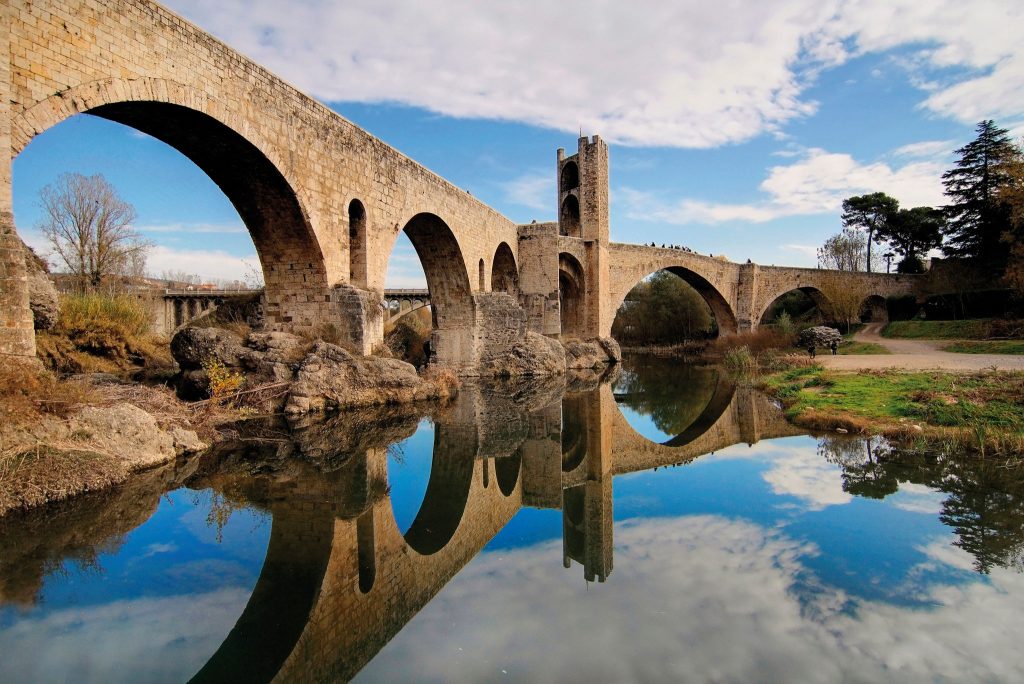
Besalú Romanesque Bridge

Besalú Romanesque Bridge

This 12th-century fortified bridge stands as the primary entrance to the town, featuring seven arches and a distinct angular design. It remains one of the most recognizable examples of medieval civil engineering in Catalonia.

Walk to the riverbank for a clear perspective of the structure.
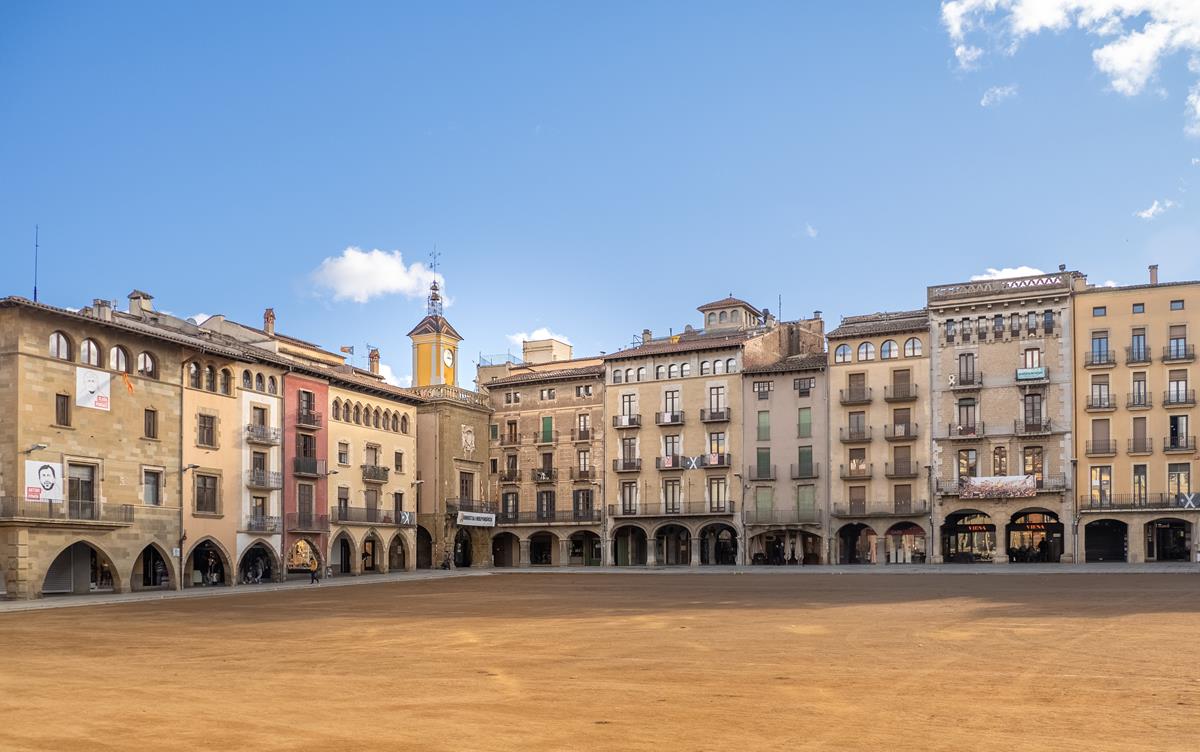
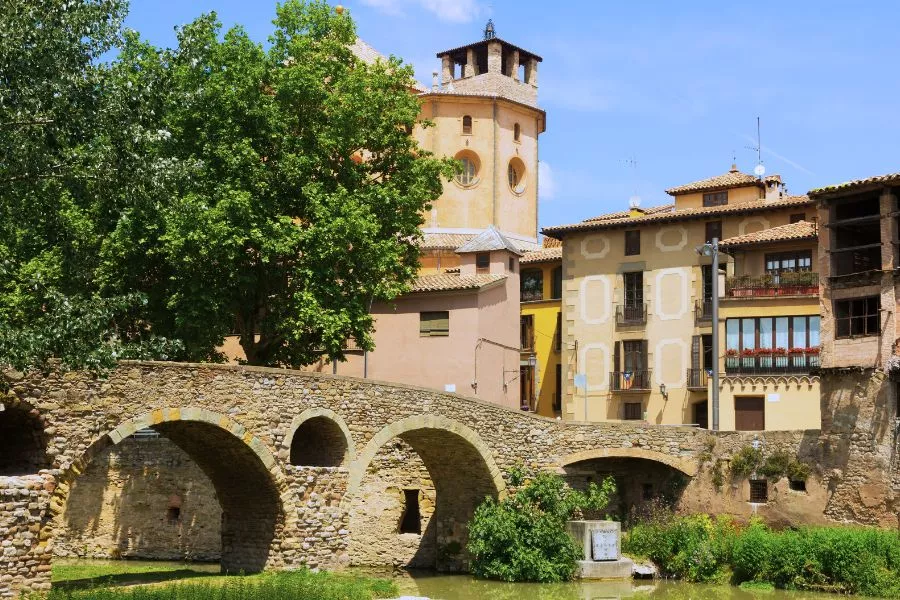
Vic Cathedral Square

Vic Cathedral Square

Plaça Major in Vic serves as the heart of the town, surrounded by arcaded buildings that host local markets and gatherings. The adjacent cathedral complex displays a mix of architectural styles including its notable neoclassical facade.

Visit the square during market hours to observe local trade.

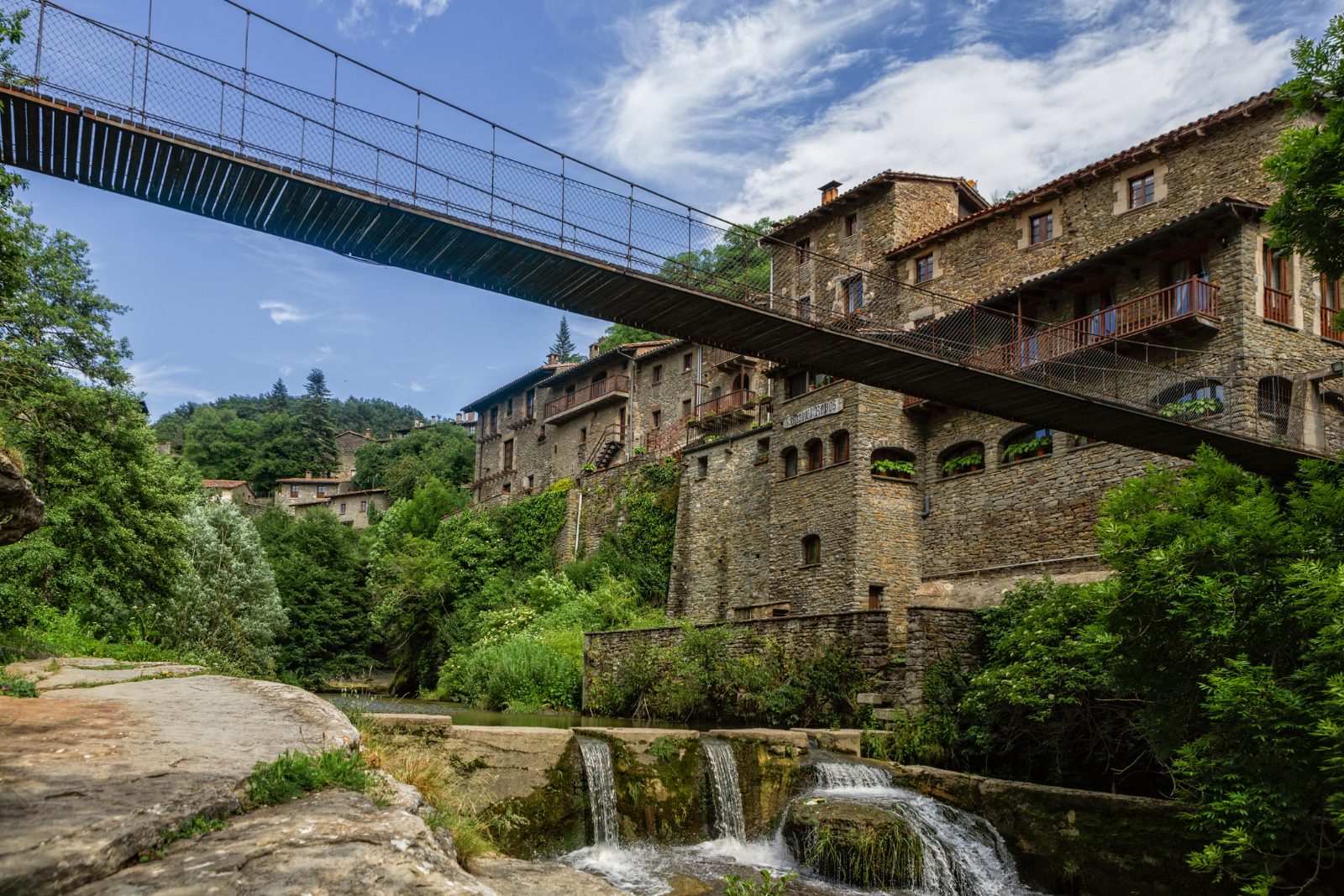
Rupit Hanging Bridge

Rupit Hanging Bridge

A modern suspension bridge built to provide access to the old center of Rupit, allowing visitors to walk across the stream from the parking area. It leads directly into the narrow, cobblestone streets characteristic of the village.

Cross early to avoid congestion on the narrow pathway.

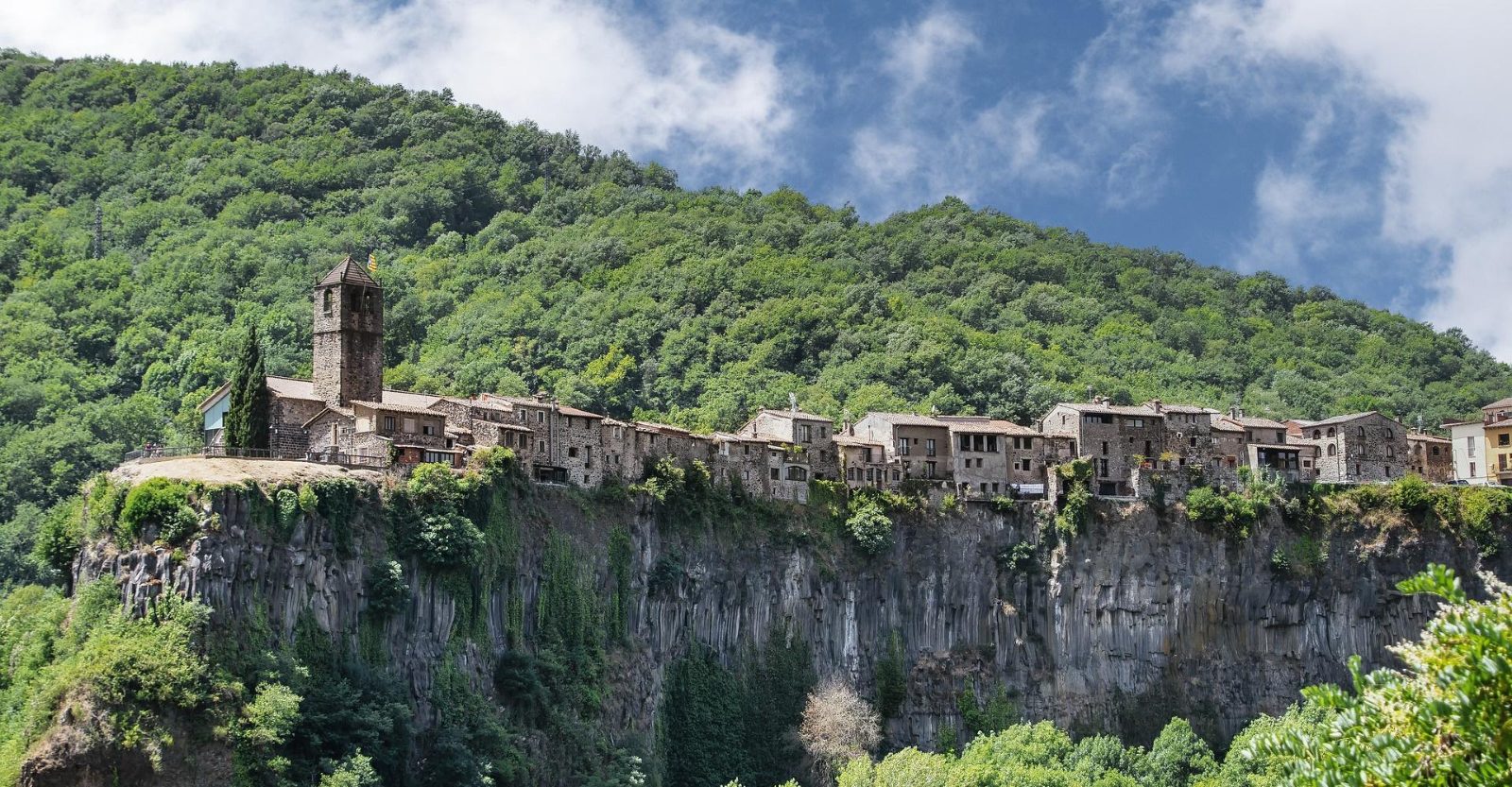
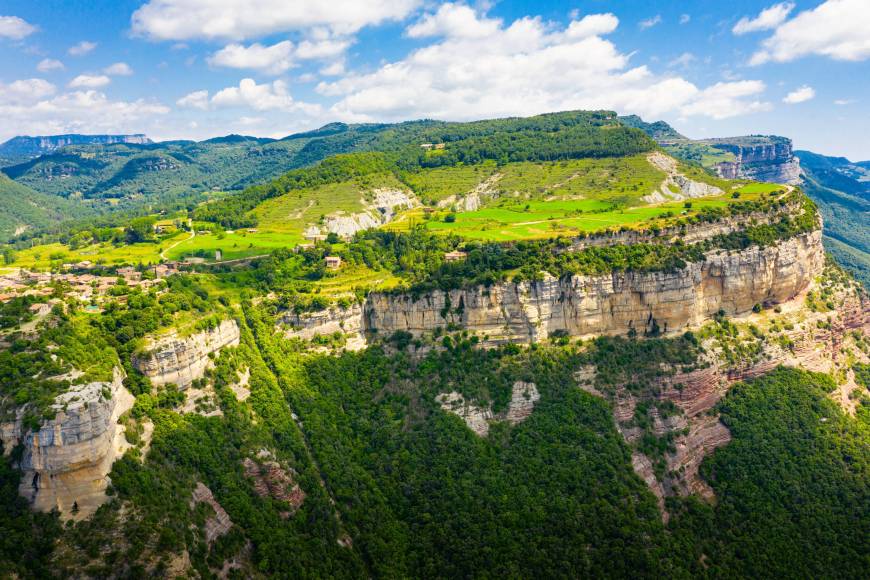
Castellfollit de la Roca Cliffside

Castellfollit de la Roca Cliffside

This village is built atop a basalt crag formed by lava flows, with houses extending to the very edge of the precipice. The view from below highlights the dramatic vertical drop of the volcanic rock.

Look up from the valley floor to see the cliff houses.

History

The Historical Context of Every Medieval Town Near Barcelona

The network of fortified settlements across medieval Catalonia emerged between the ninth and eleventh centuries as Christian counts pushed south from the Pyrenees. Besalú, first documented in 977, served as the capital of an independent county until 1111, when it merged with Barcelona. Its strategic bridge across the Fluvià, completed in the eleventh century, controlled the road linking the coastal plain to the mountain passes. Rupit, perched on basalt cliffs, developed as a feudal stronghold under the jurisdiction of the Cabrera family from the twelfenclosed century onward. Vic, inheriting the Roman town of Auso, became an episcopal see in 516 and rebuilt its cathedral in the Romanesque style after Almanzor's raid in 985 destroyed the earlier structure. By the thirteenth century these towns anchored a web of markets, monasteries, and trade routes that funneled grain, wool, and iron toward Barcelona's harbor. The Jewish quarter of Besalú, protected by royal charter, housed a ritual bath—one of only three medieval mikvahs surviving in Spain—discovered in 1964 beneath Carrer del Pont. Rupit's stone houses, built from volcanic tufa quarried on-site, date largely to the sixteenth and seventeenth centuries, when the textile trade brought modest prosperity. Vic's medieval walls, raised in the fourteenth century, enclosed workshops producing leather and woolen cloth for export across the Mediterranean. Today the Romanesque bridge in Besalú still carries foot traffic above the Fluvià. Rupit's cobbled lanes and arcaded plaza remain intact, the medieval town near barcelona drawing visitors who arrive early to walk the flagstone paths before midday crowds. Vic's cathedral crypt preserves eleventh-century frescoes, and sections of the town's defensive circuit stand along Ronda de Queralt, visible reminders of the fortified medieval villages of Catalonia that once guarded the frontier.

977

Besalú first appears in written records as the seat of an independent county.

11th c.

The fortified bridge across the Fluvià at Besalú is completed, securing the route north.

1111

The County of Besalú is absorbed into the County of Barcelona.

12th c.

Rupit develops as a feudal holding under the Cabrera family, exploiting its defensive cliff position.

13th c.

Jewish community in Besalú builds a mikvah, rediscovered intact in 1964.

14th c.

Vic raises stone defensive walls enclosing its cathedral and market district.

16th–17th c.

Rupit's present stone architecture takes shape as the textile trade expands.

Nearby

Exploring More Than One Medieval Town Near Barcelona

Visitors often combine stops to experience different facets of Catalan history in a single day. These nearby destinations complement a trip to Rupit by offering contrasting medieval architecture and local traditions.

Vic

Vic

35 km

Known for its expansive Plaça Major and historic cathedral, Vic provides a larger urban medieval center that contrasts with the compact nature of Rupit.

Besalú

Besalú

80 km

Famous for its iconic 12th-century fortified bridge, Besalú serves as a major gateway to the Garrotxa volcanic region and aligns with a northern route.

Tavertet

Tavertet

12 km

This village sits atop dramatic sandstone cliffs, providing panoramic views of the Sau Reservoir and a quiet atmosphere that pairs well with the hikeable trails near Rupit.

Book

Check availability

Frequently asked

Frequently asked questions about visiting a medieval town near Barcelona

Everything you need to know about medieval town near barcelona

What is the best medieval town near Barcelona to visit?

Rupit is frequently recommended as a quintessential medieval town near Barcelona due to its preserved stone houses and hanging bridge. Visitors also enjoy Besalú and Vic for their unique Romanesque landmarks and heritage. Exploring a Catalan village allows travelers to experience the rural character of the region beyond the city center. Choosing a medieval town near Barcelona provides a glimpse into the history of the Osona and Garrotxa areas.

Is there an entrance fee for a medieval town near Barcelona like Rupit?

Entry to the village of Rupit is 0 EUR, though a municipal parking fee applies for visitors arriving by vehicle. There are no additional entrance fees for wandering the public streets of these heritage sites. Most historic districts in Catalonia function as open-air museums that remain accessible to the public at no cost.

When is the best time to visit a historic Catalan village?

For the best experience, we recommend arriving between 07:00 and 10:00 to avoid crowds and ensure parking availability in the municipal lot. Early arrival is essential for any medieval town near Barcelona to enjoy the quiet atmosphere of the cobblestone streets. Mid-morning tends to see an influx of group tours, so planning your visit for the early hours is highly beneficial.

Can I explore the architecture of a medieval town near Barcelona with my family?

Yes, these destinations are family-friendly and offer safe, pedestrianized environments. Walking through a medieval town near Barcelona gives children a chance to see authentic stone architecture and local fountains. While many streets have uneven pavement, they are generally manageable for active families seeking cultural enrichment.

How do I get to a traditional medieval town near Barcelona?

Most travelers reach a medieval town near Barcelona by car, which provides the flexibility needed to explore remote mountain locations. Rental vehicles allow you to visit multiple sites, such as the bridges and plazas of the Osona region, at your own pace. Detailed directions and regional transit options are available in our specific transportation guide.

Are these historic sites open on weekends?

Yes, these locations are open daily, with access available from 00:00–23:59 throughout the week. This includes weekends, allowing you to plan your trip to a medieval town near Barcelona at your convenience. Please note that while public areas are always open, individual shops and visitor centers may operate on limited seasonal hours.

Keep reading

More guides & pages