10 hr
Medieval Catalonia Villages Day Trip
Journey through centuries-old stone villages, cliffside hamlets, and ancient Jewish quarters in rural Catalonia
Reserve
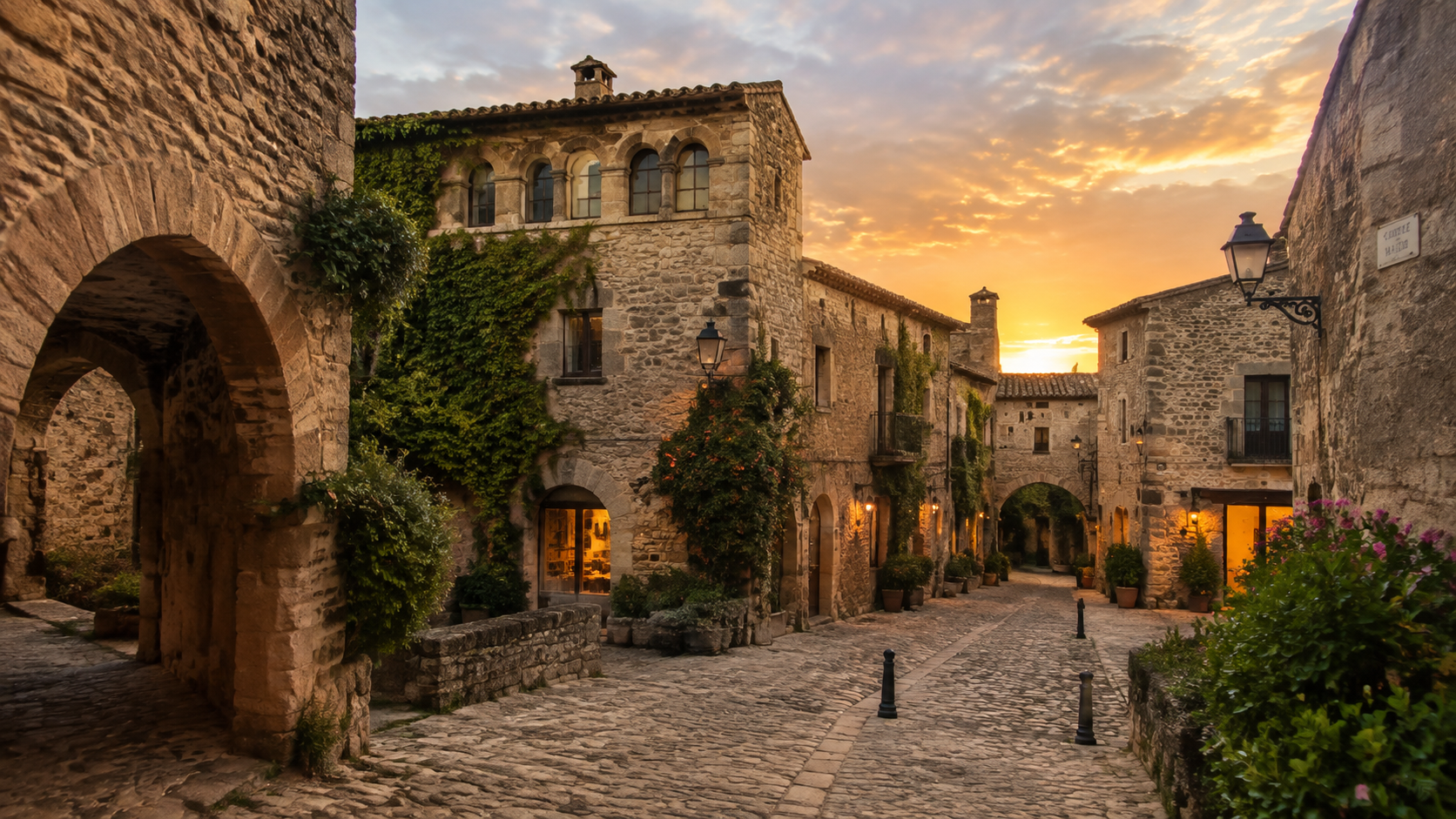
Stone lanes where time stopped, Romanesque bell towers rising over volcanic plains.
Hand-picked by our editors — only the best 4 guided routes from 11 reviewed.
Verified partners for Medieval Villages Tour Barcelona tours, free cancellation where available, and instant confirmation on every booking.
10 hr
Journey through centuries-old stone villages, cliffside hamlets, and ancient Jewish quarters in rural Catalonia
Reserve
10 hr
Journey through Catalonia's best-preserved medieval towns, volcanic landscapes, and ancient Jewish heritage
Reserve
8 hr 30 min
Journey through ancient towns, volcanic cliffs, and preserved medieval streets on this guided countryside escape
ReservePrices from verified partners. Availability updates in real time at checkout. Free cancellation policies apply where shown.
Every Medieval Villages Tour Barcelona tour side-by-side — duration, what's included, how you redeem.
| Experience | Duration | Rating | Skip-the-line | Guide | Small group | Free cancel. | Price | |
|---|---|---|---|---|---|---|---|---|
|
Guided Experience Most popular
Medieval Catalonia Villages Day Trip
|
10 hr | ★ 4.7 | ✓ | ✓ | ✓ | ✓ | €99 | Book → |
|
Guided Experience
Medieval Catalonia: Besalú & Historic Villages
|
10 hr | ★ 4.8 | ✓ | ✓ | ✓ | ✓ | €99 | Book → |
|
Guided Experience
Catalonian Medieval Villages & Girona Day Tour
|
8 hr 30 min | ★ 4.8 | ✓ | ✓ | ✓ | ✓ | €88 | Book → |
All prices from verified partners. Availability and exact terms confirmed at checkout.
Organized trips offer superior historical context and seamless logistics, while self-driving provides unmatched freedom for those preferring a personal itinerary. Most visitors who compare medieval villages tour barcelona tours against car rentals find that guided options excel in storytelling, while rental exploration offers a more intimate connection with the Catalan landscape.
| Feature | Top pick Guided Day Tour | Independent Car Rental |
|---|---|---|
Navigational Ease |
Expert driver handles all logistics | Requires GPS and local parking awareness |
Cost Flexibility |
Fixed inclusive pricing | Variable fuel and parking costs |
Depth of Historical Context |
Live guide provides cultural insights | Self-paced via guidebooks or apps |
Travel Time |
Scheduled transit windows | Adjustable to personal interest |
Group Pace vs Individual Pace |
Structured group schedule | Fully customizable individual timing |
Tickets and Access |
Medieval villages tour barcelona tour handled | Requires independent parking and access planning |
| See tickets → |
Verdict: Choose a guided medieval villages tour barcelona tickets package if you prioritize expert narratives, or opt for a rental if you prefer the flexibility to explore the Costa Brava region at your own speed.
Choose your ticket, select your date, and reserve in under two minutes. Secure checkout handled by our verified partner.
Instant confirmation by email, with a mobile voucher you can save offline. No printing, no queuing at a collection desk.
Arrive at the entrance, show your voucher on your phone, and walk in. Most tickets include priority or skip-the-line access.
Practical details for Medieval Villages Tour Barcelona tickets straight from our verified partners — hours, access, rules, and how to get there.
Barcelona City Center
Common departure point for group tours
Open in Google MapsMost flexible option for visiting multiple sites at your own pace.
Wear comfortable walking shoes suitable for uneven cobblestone streets. Modest clothing is recommended when visiting local parish churches.
Travel light, as narrow medieval streets and steep steps make large luggage impractical. Security is minimal in these open-air historical environments.
Photography is permitted throughout the public streets and squares. Please respect the privacy of residents living within the medieval villages.
Many medieval villages feature steep, uneven, and narrow stone streets that may present challenges for mobility-impaired visitors. Historic centers often lack modern accessibility infrastructure.
Mobile reception is generally reliable, but coverage may fluctuate in deeper valleys or remote mountainous areas near villages like Rupit.
The villages are welcoming for families, though pushchairs may be difficult on cobblestones. Consider baby carriers for a more convenient medieval villages tour barcelona tour experience.
Traditional Catalan taverns are available in most villages for lunch or snacks. We recommend carrying a reusable water bottle during your medieval villages tour barcelona excursion.
Pets are allowed in most public outdoor spaces if kept on a leash. Check local regulations for individual establishment access during your medieval villages tour barcelona trip.
Always check weather forecasts before departing Barcelona, as inland mountain temperatures can differ significantly from the coast.
Best time to go, insider tips, nearby landmarks, and the cancellation fine print — flip through to skim what matters to you.
How crowds, weather, and events shift across the year.
Mild temperatures and green landscapes make it ideal for walking.
Small details that turn a good visit into a great one.
Reach the villages between 08:00–10:00 to experience the calm before tourist coaches arrive.
Non-bookable sights within a short walk — free to visit, easy to pair.
Impressive Gothic nave and historical significance.
Flexible, no hidden fees.
As public historic sites, no entrance fees are charged to the villages themselves. Any booked medieval villages tour barcelona tour service follows the specific cancellation terms of your selected local operator.
Hand-picked options within walking distance — pick a district for vibe, or a specific hotel for convenience.
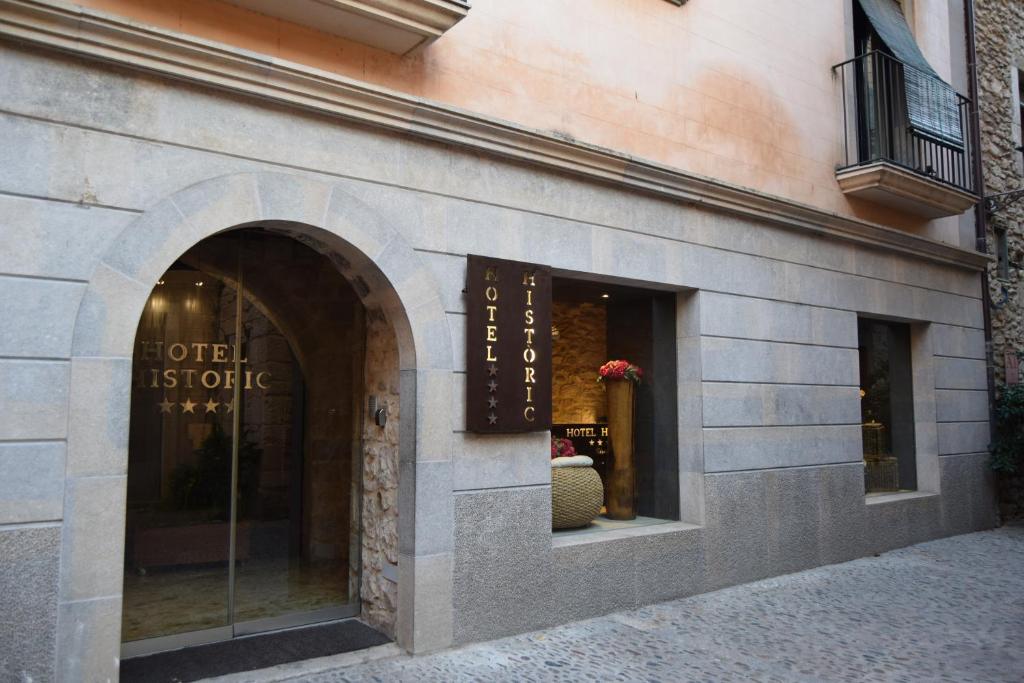
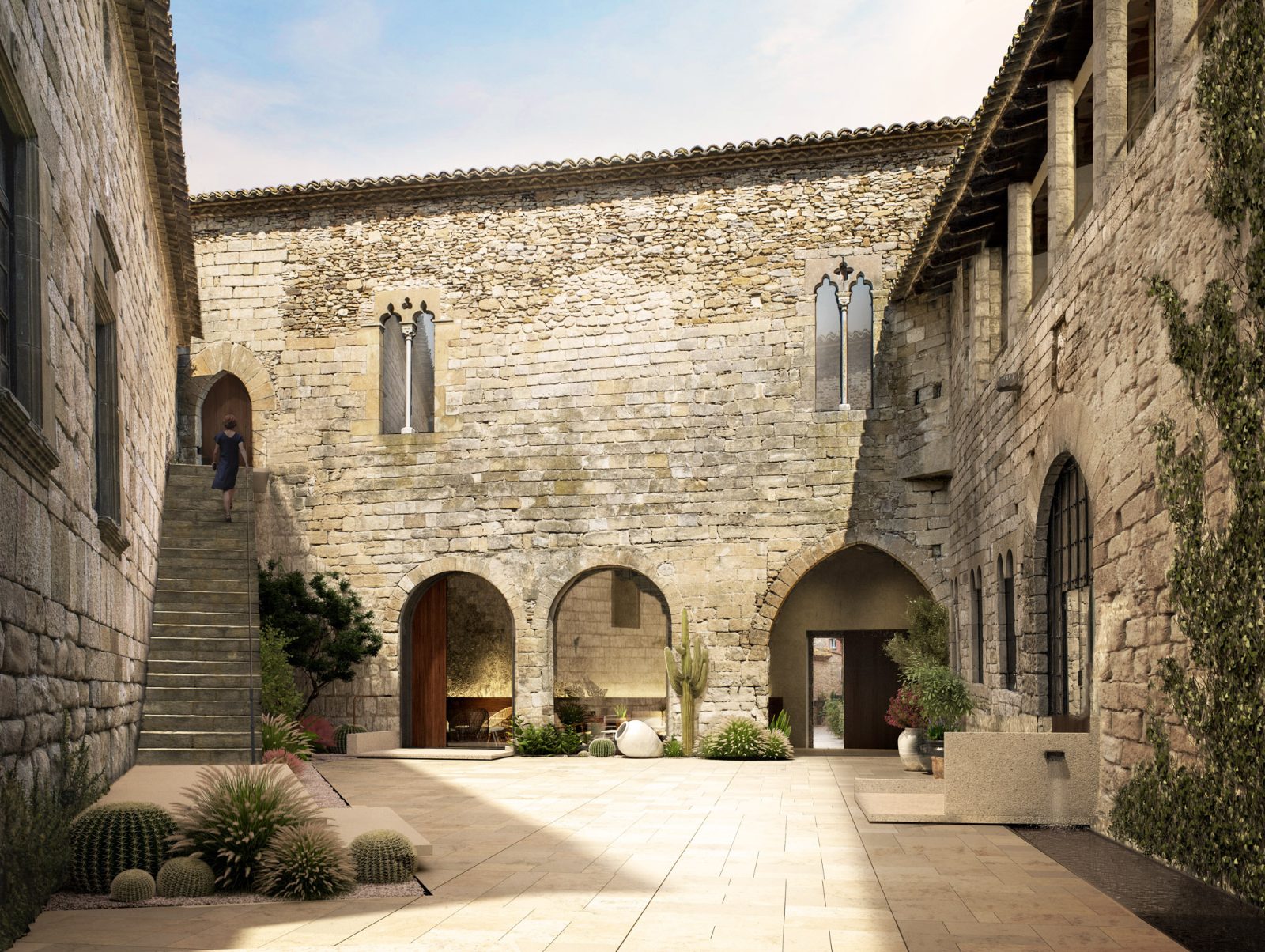
Authentic stays within historic stone buildings.
More than sixty medieval villages remain inhabited across the Girona and Barcelona provinces, their Romanesque churches, arcaded plazas, and defensive walls preserved not as museum sets but as working communities where families have occupied the same stone houses for eight centuries.
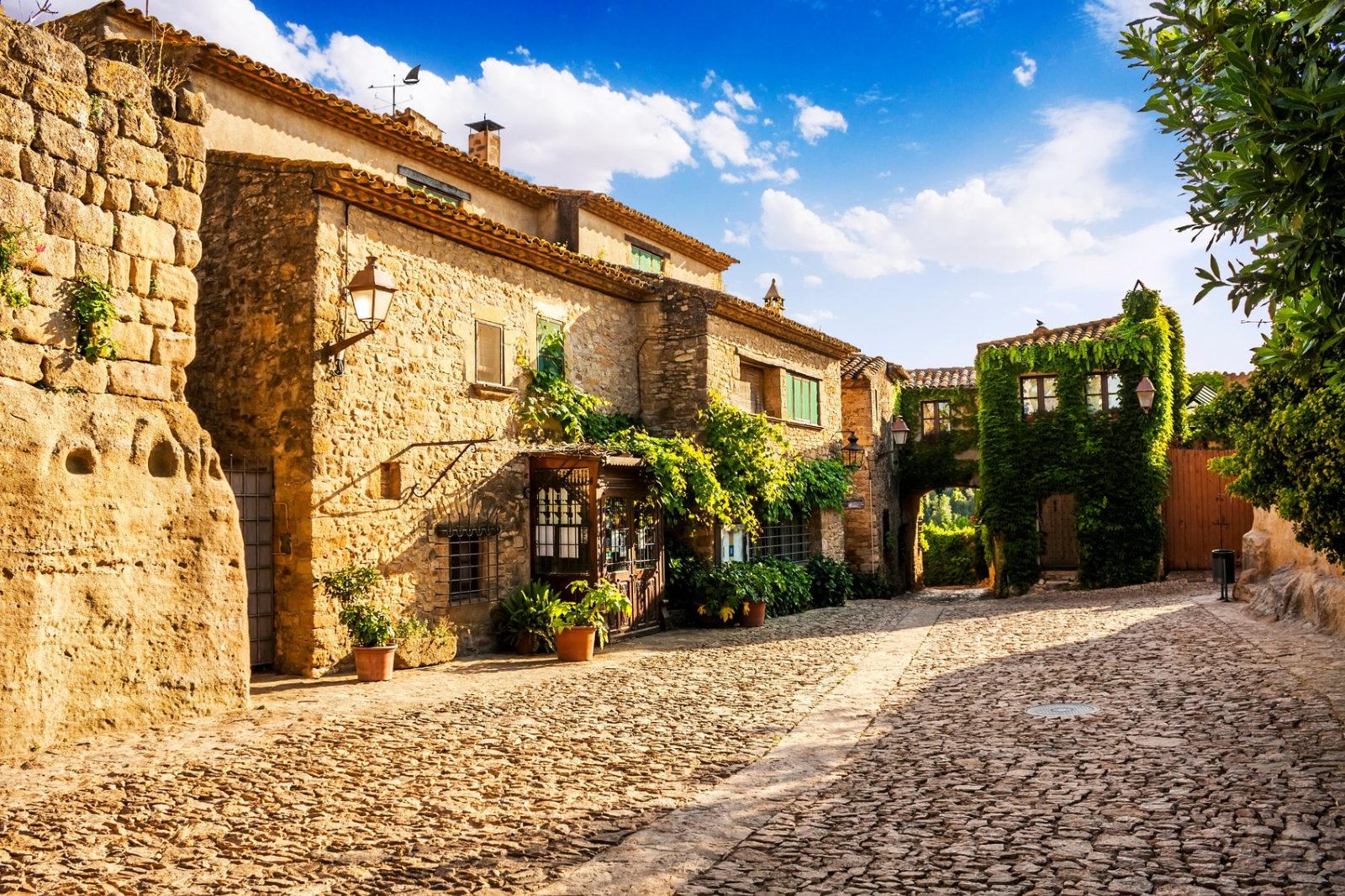
Besalú, Rupit, Peratallada, Santa Pau, and Pals anchor the most concentrated medieval belt in Western Europe, each settlement positioned on a volcanic outcrop or river crossing that once commanded Catalonia's grain routes and pilgrimage roads to Santiago de Compostela. The tenth through thirteenth centuries defined their geometry: narrow lanes that forced attackers into single file, overhanging upper stories that allowed defenders to pour boiling oil from corbelled galleries, and central plazas sized to hold the entire population during siege alarms.
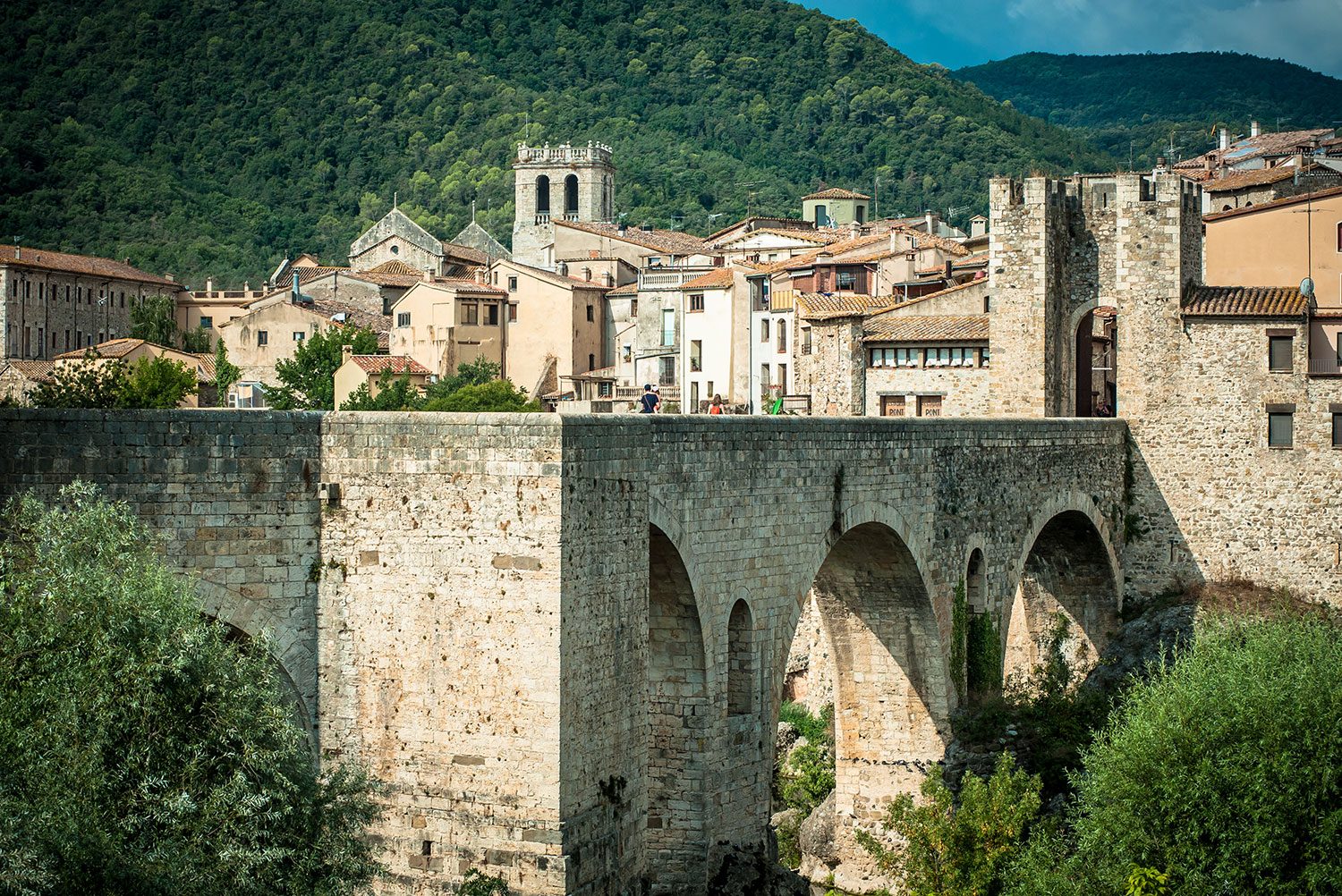
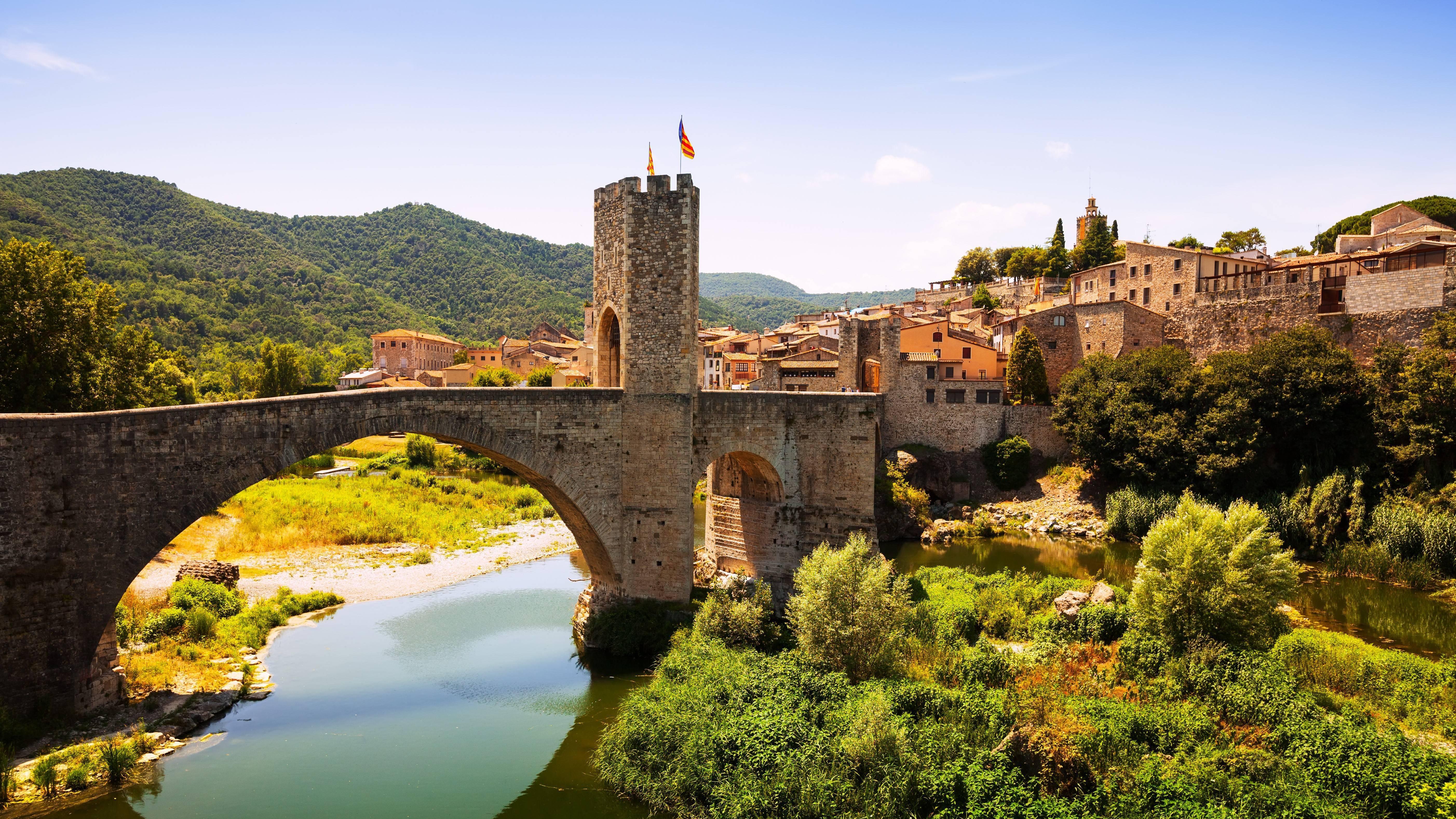
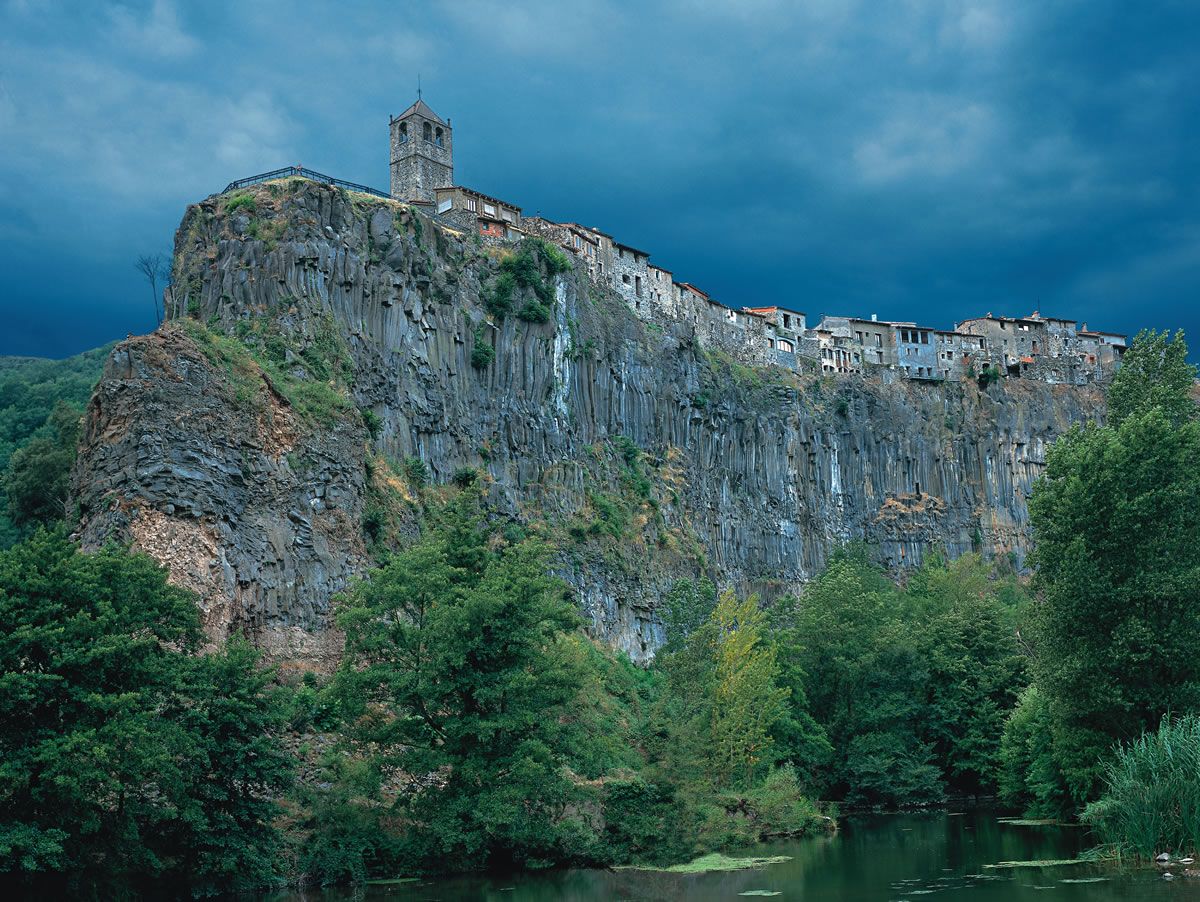
Today's medieval villages tour Barcelona itineraries reveal a Catalonia invisible from the coast. Besalú's twelfth-century Mikveh, one of only three surviving Jewish ritual baths on the Iberian Peninsula, descends seven metres below street level to reach the Fluvià River's purifying waters. Rupit clings to a basalt cliff so steep that the village's single entrance crosses a hanging bridge rebuilt in 1946 to match the original medieval span. Peratallada, whose Catalan name translates to "carved stone," sits within a dry moat chiselled directly from bedrock, its defensive perimeter unbroken for nine hundred years. Santa Pau's Gothic porticoes frame views across the Garrotxa Volcanic Zone Natural Park, where forty extinct cones rise from beech forests that provided charcoal for medieval forges.
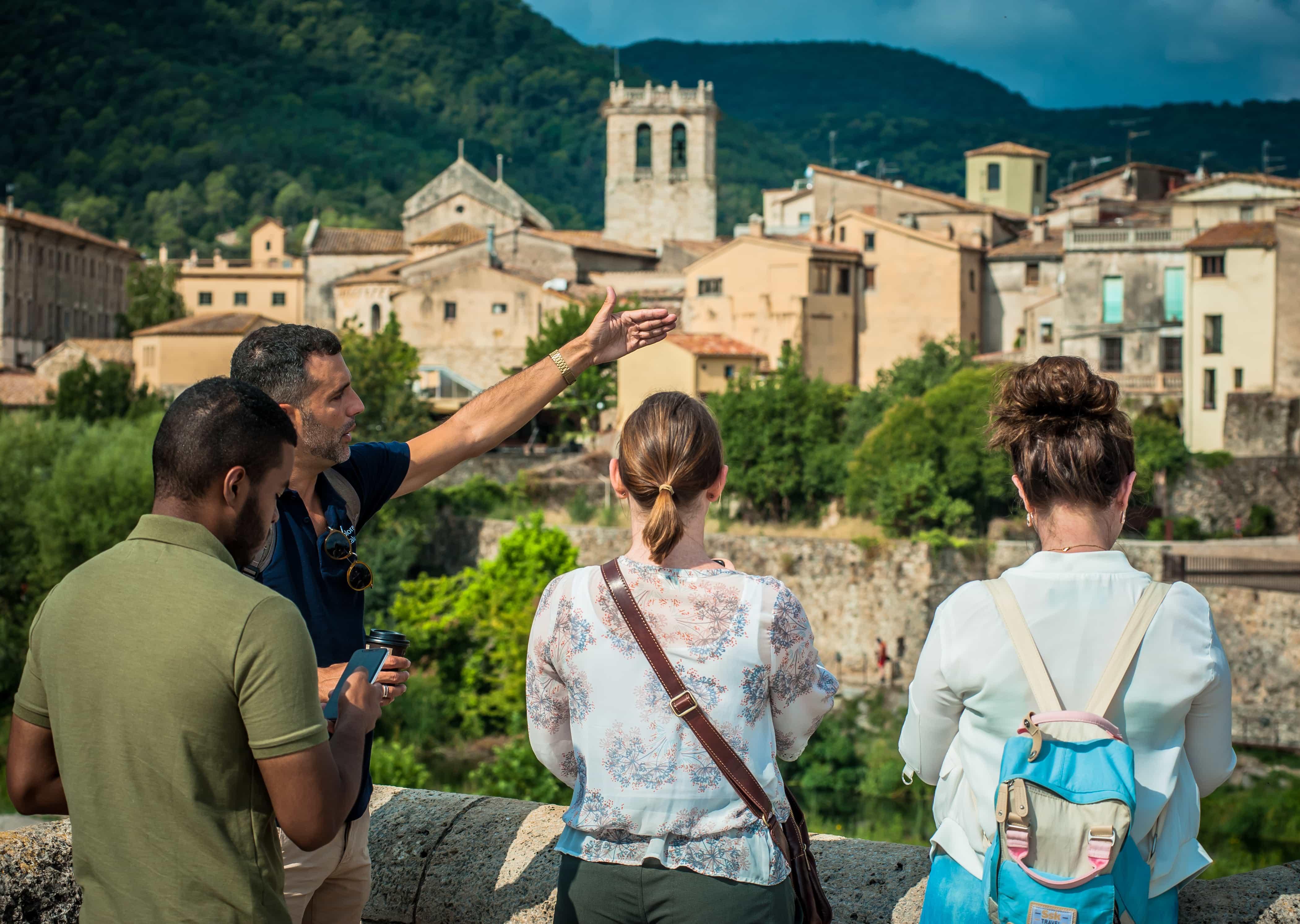
The villages' architectural unity stems from a shared building vocabulary: golden sandstone quarried within five kilometres of each site, terracotta roof tiles fired in communal kilns, and Romanesque barrel vaults that distribute weight without flying buttresses. Few cathedrals interrupt the skyline; parish churches here are fortified structures with arrow slits in their apses, built when the Saracen raids of the ninth and tenth centuries made every stone building a potential refuge. Catalonia's medieval villages tour routes run year-round, though spring and autumn deliver temperate weather for the hilltop climbs and cobbled lanes that define these settlements. The Girona province clusters seven major villages within a thirty-kilometre radius, making day-long circuits feasible without highway driving. Free entry to village streets and public areas allows independent exploration, while guided medieval villages tour Barcelona tickets include transport, bilingual commentary, and reserved access to privately owned fortress courtyards and watchtowers closed to unescorted visitors.

"Besalú's twelfth-century Mikveh descends seven metres below street level to reach the Fluvià River's purifying waters."
A step-by-step walkthrough of Medieval Villages Tour Barcelona tickets — what you'll see, how long each stage takes, and the details that matter.
You depart Barcelona at eight in the morning, the coach climbing north through the Montseny massif as the Mediterranean haze gives way to the crystalline light of the Girona uplands.
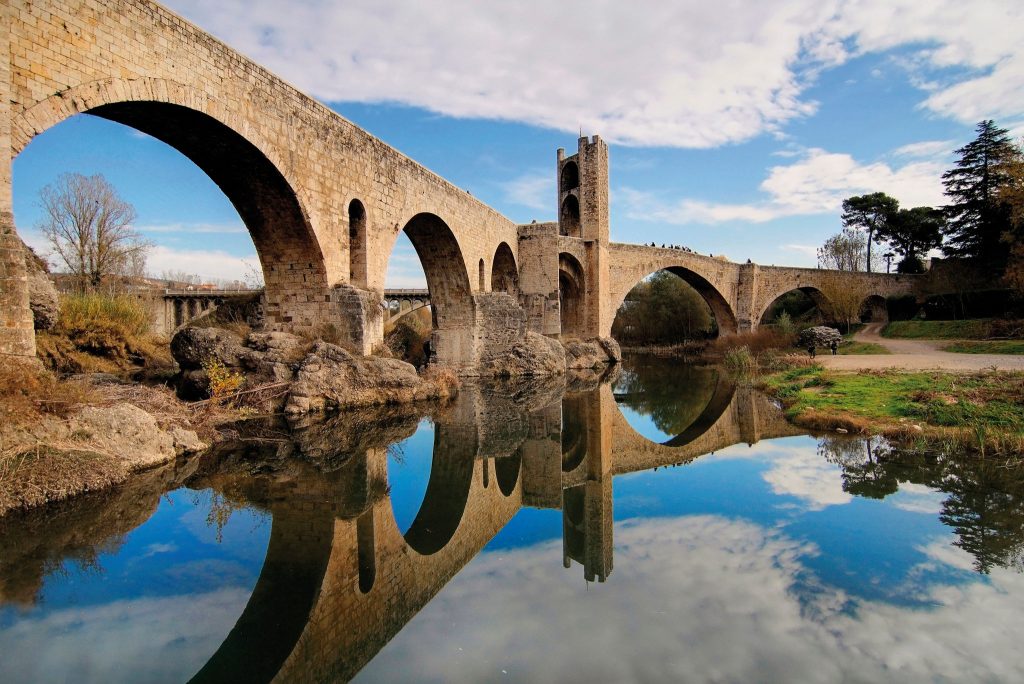
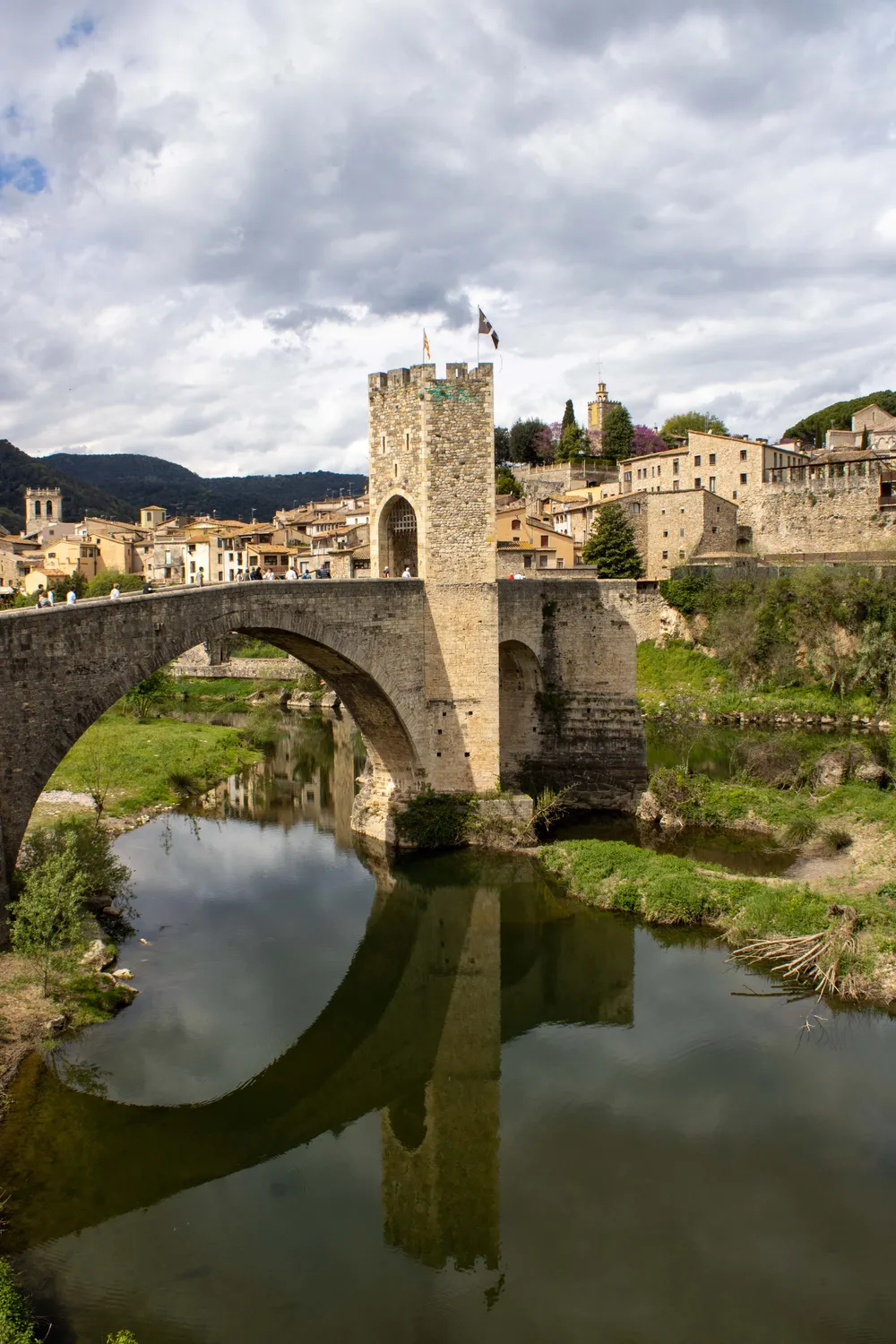
Besalú appears first, its fortified bridge spanning the Fluvià in eleven Romanesque arches, the gatehouse tower still mounting its original portcullis groove. You walk the Jewish quarter's descending lanes, pausing at the Mikveh entrance where stone steps disappear into subterranean darkness, then continue to the plaça major where arcade columns bear the chisel marks of twelfth-century masons.
Rupit demands a slower pace. The village prohibits cars, so you approach on foot across the hanging bridge, the gorge dropping thirty metres to the Rupit stream below. Volcanic basalt forms every wall and doorstep, the stone's dark grey contrasting with geranium boxes that cascade from wrought-iron balconies. Lunch is served in a restored casa pagesa, the farmhouse's beamed ceiling blackened by five centuries of hearth smoke. Peratallada follows in early afternoon: you circle the moat perimeter before entering through the portal gate, its limestone voussoirs fitted without mortar, and climb to the tower keep where arrow slits frame views across terraced olive groves that fed the garrison through winter sieges. The return to Barcelona threads through the volcanic park, the roadside dotted with Romanesque hermitages and abandoned watchtowers that once relayed smoke signals across the Catalan plain.
Public access to village streets is free (0 EUR).
The villages are public spaces, accessible 24 hours a day, though local shops operate on standard daytime schedules.
Early spring and late autumn offer the best weather, while an 08:00–10:00 arrival is ideal regardless of season.
Many streets are uneven, steep, and cobbled, which can be difficult for standard wheelchairs.
Photography is encouraged in all public areas, provided you respect private property and residents.
Most villages allow leashed pets in outdoor public spaces.
While the villages are free, booking a guided medieval villages tour barcelona ensures managed transport and historical insight.
Arrive between 08:00–10:00 to avoid the peak mid-day tourist rush in narrow streets.
Yes, many villages host traditional restaurants serving local Catalan cuisine.
Yes, a well-planned medieval villages tour barcelona itinerary can cover two to three villages in a single day.