10 hr
Medieval Catalonia Villages Day Trip
Journey through centuries-old towns, stone bridges, and clifftop viewpoints on this guided countryside escape.
Reserve
Hand-picked by our editors — only the best 5 day tours from 47 reviewed.
Verified partners for every tour, free cancellation where available, and instant confirmation on every booking.
10 hr
Journey through centuries-old towns, stone bridges, and clifftop viewpoints on this guided countryside escape.
Reserve
10 hr
Journey through volcanic valleys and centuries-old villages on this intimate small-group day trip
Reserve
8 hr 30 min
Journey through Catalonia's stunning medieval towns, ancient Jewish quarters, and cliffside villages
ReservePrices from verified partners. Availability updates in real time at checkout. Free cancellation policies apply where shown.
The landmarks, rooms, and views travelers on this tour remember — all visible on a single visit.
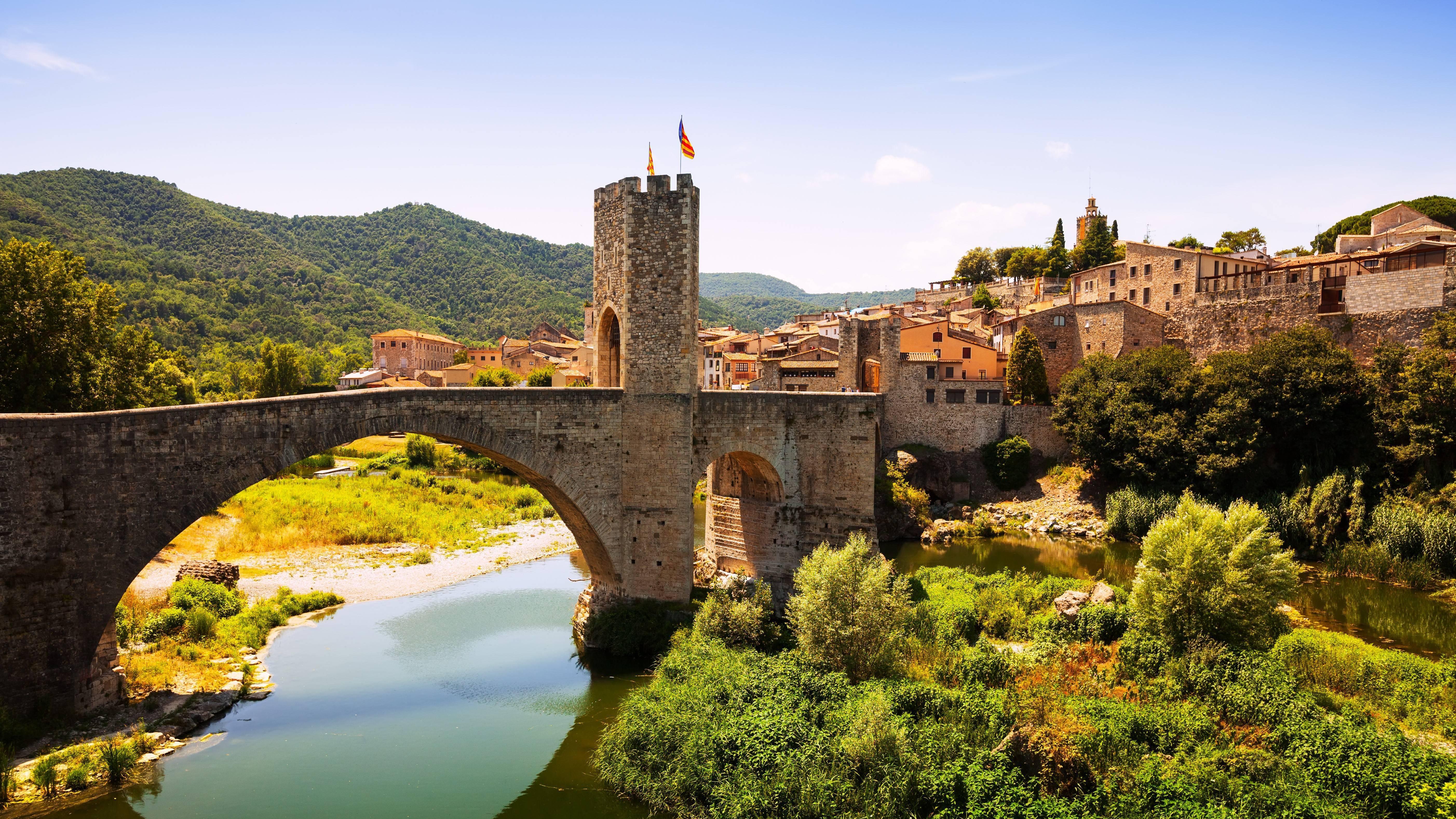
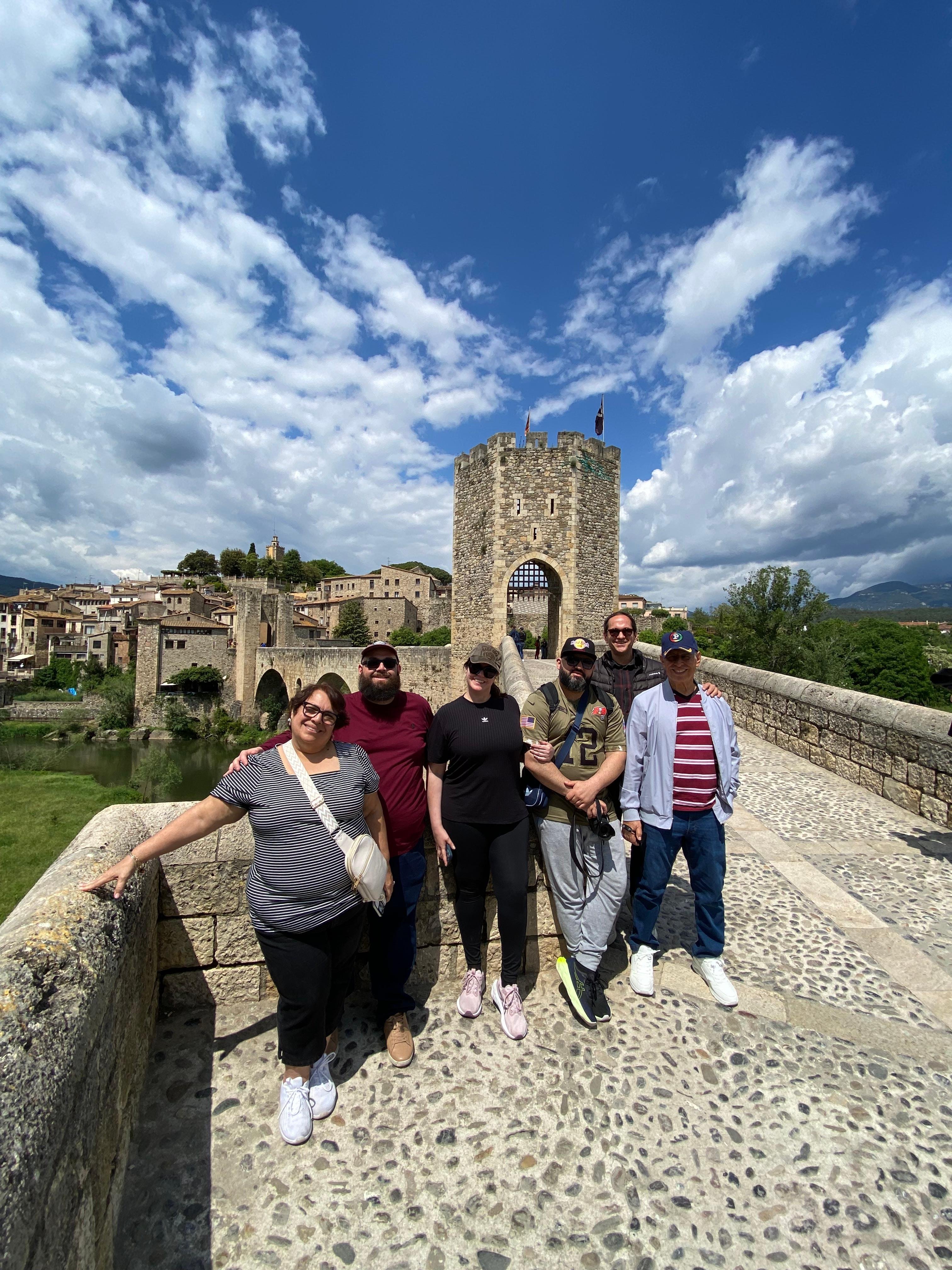
The 12th-century bridge features seven arches and two defensive towers. It remains a primary example of Romanesque civil engineering in Catalonia.
This 12th-century ritual bath is located deep underground near the river. It is a rare architectural feature dating back to the Jewish presence in the area.
This former Benedictine monastery dates back to the year 977. Its massive tower dominates the skyline of the village.
Featuring both Romanesque and Gothic elements, this structure houses a notable 15th-century stained glass window.
The central square serves as the heart of the village. It is surrounded by historic buildings and local craft shops.
Organized excursions offer stress-free logistics, while independent travel provides the freedom to curate your own schedule across Catalonia's historic stone architecture and Romanesque landmarks.
| Feature | Top pick Guided Tour | Independent Exploration |
|---|---|---|
Transportation |
Private coach with hotel pickup | Rental car or public bus |
Planning Effort |
Minimal; itinerary pre-arranged | High; route and logistics required |
Pace Control |
Fixed group schedule | Fully flexible at your leisure |
Historical Insight |
Professional guide commentary | Self-guided via maps or apps |
Cost Considerations |
All-inclusive package price | Variable fuel, tolls, and parking |
| See tickets → |
Verdict: Those seeking a medieval villages tour from barcelona tour often prefer the convenience of guided logistics, whereas independent travelers value the autonomy of securing their own medieval villages tour from barcelona tickets for flexible site access.
Choose your ticket, select your date, and reserve in under two minutes. Secure checkout handled by our verified partner.
Instant confirmation by email, with a mobile voucher you can save offline. No printing, no queuing at a collection desk.
Arrive at the entrance, show your voucher on your phone, and walk in. Most tickets include priority or skip-the-line access.
Practical details for your visit straight from our verified partners — hours, access, rules, and how to get there.
Plaça de Catalunya
Central transport hub for departures.
Follow the C-17 or AP-7 motorways north from Barcelona. Parking is available outside the historic core, which is pedestrian-friendly.
Regional bus services operate from Barcelona to the Girona area. Transferring to a local bus is necessary to reach the village center.
Comfortable walking shoes are recommended for uneven cobblestone streets. Respectful attire is suggested if entering active religious sites within the Medieval Villages of Catalonia.
Travel light, as storage options are limited on group transport for a medieval villages tour from barcelona. Keep valuables in a secure personal bag.
Photography is permitted throughout the historic zones and along the medieval bridge. Be mindful of narrow walkways when setting up equipment during your medieval villages tour from barcelona.
Portions of the historic village feature steep inclines and original medieval paving. Visitors requiring mobility assistance should evaluate paths individually during a medieval villages tour from barcelona.
Mobile phone use is unrestricted in public areas. Ensure roaming is active if relying on digital maps during your medieval villages tour from barcelona.
The area is open-air and generally suitable for families. Strollers may be difficult to maneuver on the historic stone bridge and narrow alleys.
Numerous local cafes offer traditional Catalan cuisine. Carry a reusable water bottle, especially during the summer heat experienced on a medieval villages tour from barcelona.
Pets are allowed in outdoor public areas if kept on a leash. Check with specific transport operators regarding pet policies for your medieval villages tour from barcelona.
The 0 EUR fee provides access to the main village landmarks and the iconic bridge. Always verify specific transport departure schedules for your medieval villages tour from barcelona.
Plaça dels Països Catalans
Secondary departure point for regional transit.
Get directionsBest time to go, insider tips, nearby landmarks, and the cancellation fine print — flip through to skim what matters to you.
How crowds, weather, and events shift across the year.
Mild temperatures and blooming flora make for pleasant walking conditions. April and May are ideal for this Catalan landmark visit.
Expect high temperatures in August. Early arrival between 08:00–10:00 is essential to avoid mid-morning crowds.
Small details that turn a good visit into a great one.
Arrive between 08:00–10:00 to experience the atmosphere before coaches arrive. This ensures the best photography conditions.
Wear shoes with good grip. The historic stone surfaces can be slippery during a medieval villages tour from barcelona.
Non-bookable sights within a short walk — free to visit, easy to pair.
A Romanesque church founded in the 10th century. Observe the detailed stone carvings on the facade.
One of the few remaining ritual baths of its kind in Europe. Deep stone vault construction is noteworthy.
Flexible, no hidden fees.
Full refunds are available for cancellations made 24 hours prior to the scheduled departure of your medieval villages tour from barcelona. This policy applies to all bookings including those covering the 0 EUR entrance fee.
Hand-picked options within walking distance — pick a district for vibe, or a specific hotel for convenience.
Converted medieval homes offering authentic lodging experiences.
Spacious properties located in the surrounding countryside.
Besalú's fortified bridge has spanned the Fluvià River since 1075, its seven asymmetric arches surviving floods, wars, and the passage of nine centuries of pilgrims bound for Santiago de Compostela. The town itself preserves one of Europe's most complete medieval Jewish quarters, including a twelfth-century mikveh discovered only in 1964 beneath a basement floor. By the thirteenth century, Besalú served as the administrative seat of a county stretching from the Pyrenees to the Mediterranean, its Romanesque monastery of Sant Pere anchoring a network of fortified settlements that controlled trade routes between Barcelona and Perpignan. Today, medieval villages tour from barcelona itineraries anchor themselves in Besalú before radiating outward to satellite hamlets that time and depopulation have left largely intact. Castellfollit de la Roca clings to a basalt cliff fifty meters above the confluence of two rivers, its houses forming an unbroken façade along the precipice edge. The volcanic Garrotxa region surrounding these towns erupted as recently as eleven thousand years ago, leaving forty craters and a topography of beech forests and lava flows that shaped settlement patterns for millennia. Girona, the largest stop on most catalonia medieval day trips, layers Roman walls beneath Carolingian fortifications beneath Gothic expansions, its cathedral steps—eighty-six of them—climbing toward the widest Gothic nave ever constructed without supporting columns. The architectural logic is Romanesque: semicircular arches, barrel vaults, thick walls pierced by narrow windows designed as much for defense as for light. Sant Joan de les Fonts, four kilometers from Besalú, demonstrates the style's austerity in its cloistered monastery, where carved capitals depict biblical scenes with the flat, frontal geometry of eleventh-century sculpture. These structures were built by stonemasons working within a tradition that stretched from Lombardy to León, their rounded apses and square bell towers echoing forms repeated across Christian Europe during the three centuries following the year 1000. The region's rural character—wheat fields, volcanic soil, populations that peaked in the fourteenth century and have never recovered—has preserved stone and mortar that elsewhere vanished beneath baroque renovations or industrial sprawl. Walking Besalú's Carrer del Pont Vell at dawn, when the fortified bridge reflects in the Fluvià without a tour coach in sight, requires no imagination to reconstruct the medieval past. The bridge is the past, unrestored and functional, used daily by residents who cross it to buy bread at the bakery that occupies a fifteenth-century guildhall. Medieval villages tour from barcelona tickets grant access not to a museum but to a landscape where the Middle Ages remain the dominant architectural vernacular, where Romanesque endures as the vocabulary of everyday space.
"The bridge is the past, unrestored and functional, used daily by residents who cross it to buy bread at the bakery that occupies a fifteenth-century guildhall."
A step-by-step walkthrough of the visit — what you'll see, how long each stage takes, and the details that matter.
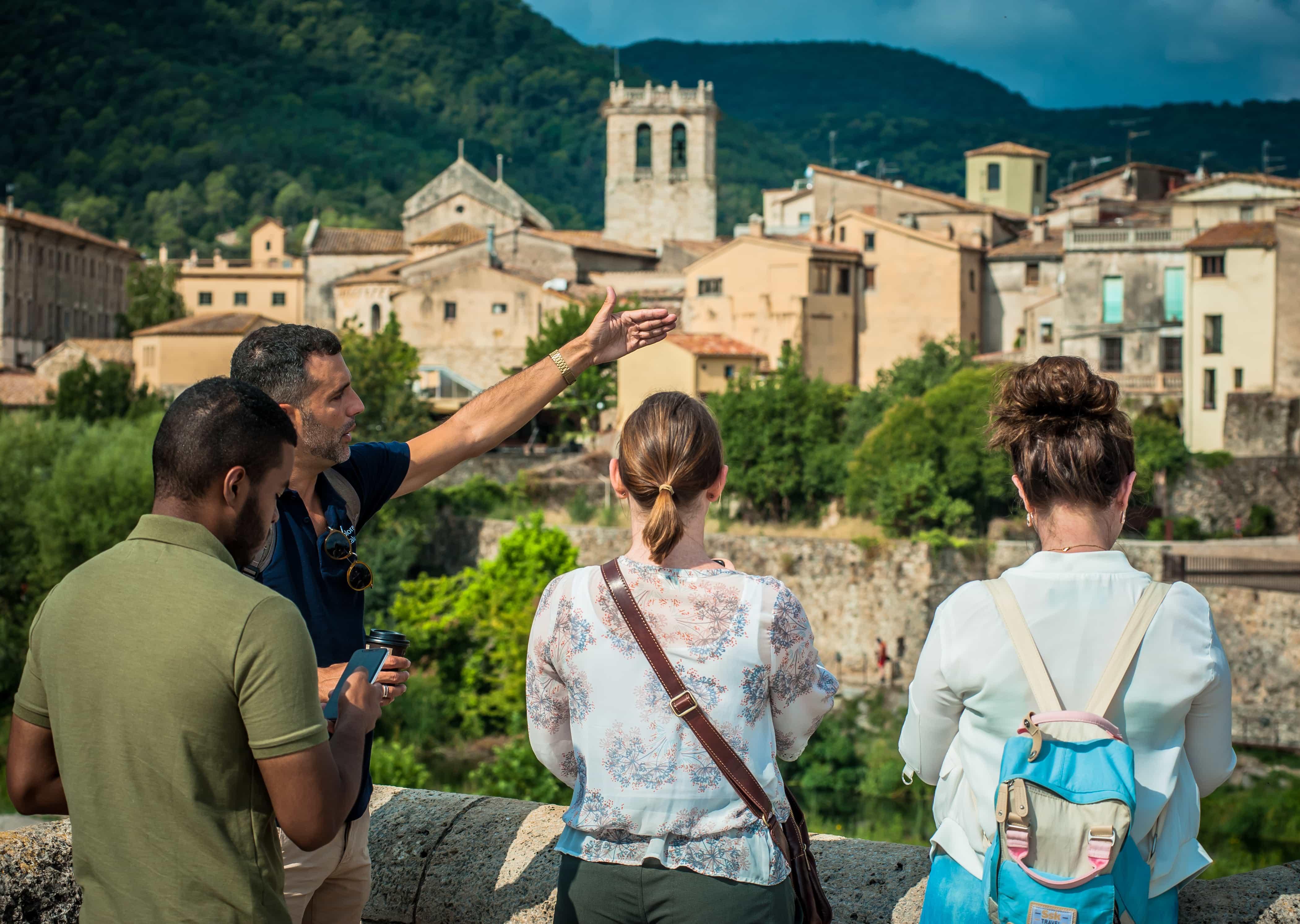
You board an air-conditioned coach in central Barcelona at eight in the morning, the highway tracing the coastline north before turning inland toward the volcanic hills of La Garrotxa. Ninety minutes later, you step onto Besalú's fortified bridge, its limestone warm under your palm as you count the seven arches stretching across the Fluvià. Your guide leads you through the Jewish quarter's narrow lanes, pausing at the mikveh entrance—a stone staircase descending into shadow—before continuing to the Plaza Major, where a Romanesque arcade frames a café serving cortados and croissants. After an hour of free time to photograph the bridge from the riverbank or climb to Sant Pere monastery, you reboard for Castellfollit de la Roca. The village appears suddenly as the coach rounds a curve: fifty houses perched on a basalt cliff, their rear walls flush with the precipice. You walk the single main street in fifteen minutes, emerging at a belvedere where the cliff drops vertically to the river valley below. Lunch is typically in Olot or a farmhouse restaurant outside Girona, where grilled vegetables and local sausage arrive on ceramic plates. The afternoon centers on Girona's old quarter. You climb the cathedral steps—count them if you like; there are eighty-six—then descend to walk the ancient walls, the rampart path offering rooftop views across terracotta and stone. The Call, Girona's former Jewish quarter, preserves alleyways so narrow you can touch both walls simultaneously. By six, you're back on the highway to Barcelona, the Pyrenees fading behind you as the coach rejoins coastal traffic. You arrive at your hotel by half past seven, medieval villages tour from barcelona itineraries delivering you back to the twenty-first century with dust on your shoes and Romanesque geometry still fresh in your visual memory.
The historic sites are open Monday through Sunday, 00:00–23:59. This allows for flexible scheduling during your medieval villages tour from barcelona.
Entry to the historic village and medieval bridge is 0 EUR. This is a benefit for those booking a medieval villages tour from barcelona.
The best arrival window is 08:00–10:00 to avoid mid-morning crowds. This is highly recommended for any medieval villages tour from barcelona.
While most areas are accessible, the medieval streets feature historic cobblestones. Visitors should exercise caution throughout the Medieval Villages of Catalonia.
Yes, but please keep belongings compact for transport on your medieval villages tour from barcelona. Security is the responsibility of the visitor.
Photography is permitted in public spaces. Capture the unique architecture typical of a medieval villages tour from barcelona.
Wear comfortable walking shoes suitable for stone streets. Dress in layers to adapt to the climate during your medieval villages tour from barcelona.
Transit to the Medieval Villages of Catalonia is best managed via professional tour transport from Barcelona. Private driving is also an option.
Yes, families are welcome. Be aware that the terrain can be challenging for strollers during a medieval villages tour from barcelona.
Cancellations are accepted up to 24 hours before departure for a full refund. Check the terms of your specific medieval villages tour from barcelona tickets.